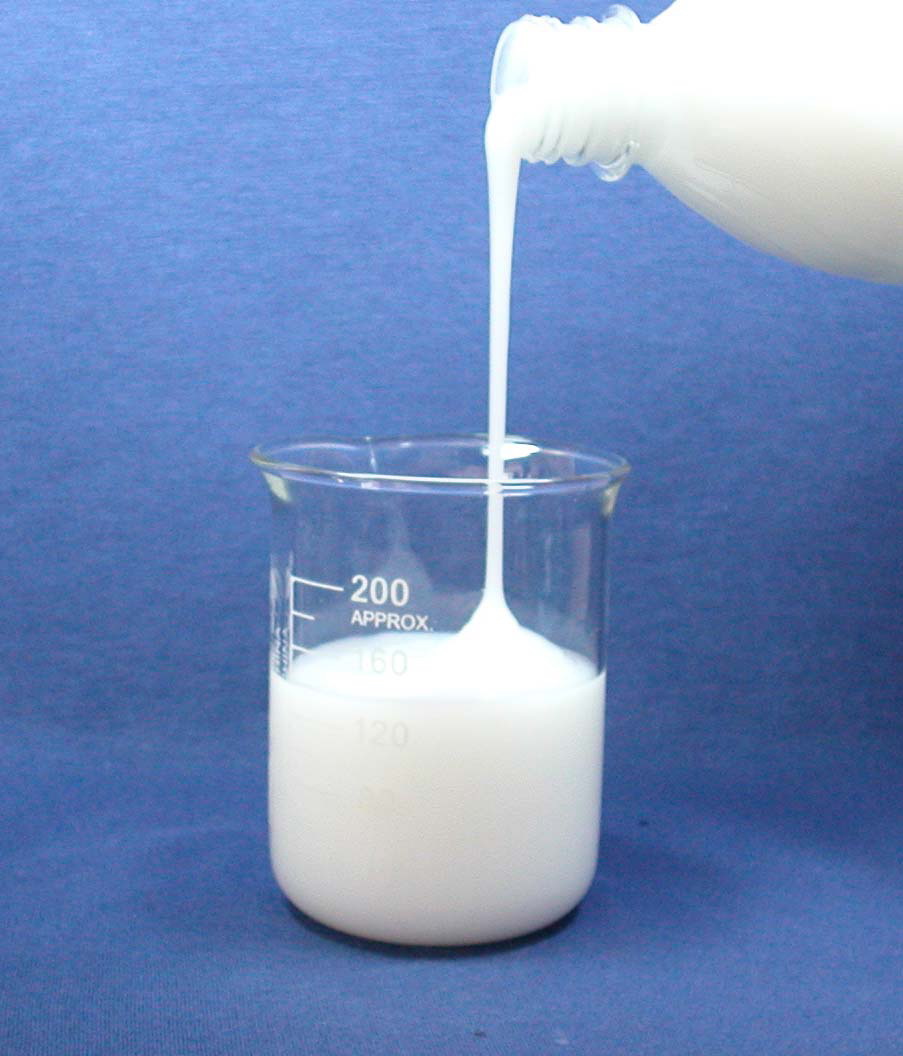
silice furieuse hydrophobe

Maison

silice furieuse hydrophobe

  • Application de la silice fumée dans DefoaMer
    Application de la silice fumée dans DefoaMer
    Mar 11, 2025
    Defoamers est actuellement un additif largement utilisé, jouant un rôle important dans divers domaines tels que la nourriture, la pétrochimie, la fabrication du papier et le nettoyage industriel. Parmi eux, les désacles en silicone sont les produits DefoaMer les plus largement utilisés et consommés. D'autres types de défoamères, tels que l'huile minérale et le polyéther, complètent les applications de défoamères à base de silicone. Les principales composantes des défoamères en silicone comprennent la pâte de silicone, les émulsifiants et les épaississeurs, la pâte de silicone étant l'ingrédient actif dans les défilons de silicone. La pâte de silicone est principalement composée d'huile de silicone (ou d'huile minérale, d'huile végétale, etc.) et de silice. En tant que composante essentielle de Defoamers, la silice joue un rôle crucial.Prenant un défoamère avec de l'huile de diméthyl silicone comme base de pâte de silicone comme exemple, en raison de la mauvaise dispersibilité et de la faible solubilité de l'huile de diméthyl silicone dans les systèmes d'émulsion, il est nécessaire d'utiliser de la silice (noir de carbone blanc) ou divers émulsifiants pour améliorer sa dispersion. Les groupes de silanol en noir de carbone blanc peuvent former des liaisons hydrogène avec l'eau, augmentant la viscosité du système, réalisant un effet épaississant et favorisant la dispersion et la stabilité du défoamère. En raison de la petite taille des particules, de la grande surface spécifique et de l'énergie de surface élevée du noir de carbone blanc, il peut générer une force significative pour adsorber les bulles. Avec l'huile de silicone, il forme une force qui attaque les bulles, créant des points faibles. Sous la basse tension surface de l'huile de silicone, la rupture des bulles, conduisant à la défilance. Ceci est le principe général de la façon dont les défoamères fonctionnent. En résumé, le noir de carbone blanc sert principalement d'épaissir, de se disperser et d'adsorber les bulles dans les défoamères. Le noir de carbone blanc hydrophile a une mauvaise compatibilité avec l'huile de silicone, tandis que le noir de carbone blanc hydrophobe, après modification de la surface, peut être bien mouillé et dispersé dans les systèmes d'huile de silicone en raison de son hydrophobicité.La méthode de préparation de Defoamers implique principalement deux étapes. La première étape est la préparation de la pâte de silicone, qui implique la dispersion et la réaction du noir de carbone blanc dans l'huile de silicone. La deuxième étape consiste à ajouter des émulsifiants, des épaississeurs et d'autres additifs pour émulsifier et disperser la pâte de silicone en une émulsion, qui peut ensuite être diluée au besoin pour préparer les amébouins de différentes concentrations. Le noir de carbone blanc peut être divisé en deux types basés sur les processus de production: noir blanc précipité en noir et noir de carbone blanc furieux. L'avantage du noir de carbone blanc précipité réside dans son faible coût, mais en raison de sa plus grande taille de particules, elle est sujette à la sédimentation, ce qui peut entraîner le colmatage des filtres dans de nombreuses applications de défoamère. En revanche, le noir de carbone blanc furieux a une taille de particules plus petite, de meilleures propriétés de suspension, une bonne compatibilité avec les émulsifiants, nécessite moins de quantité additive et a d'excellentes propriétés d'épaississement et d'antisédimentation. De plus, le noir de carbone blanc furieux qui a subi une modification hydrophobe possède intrinsèquement certaines propriétés de défooaming, ce qui en fait une solution idéale aux problèmes rencontrés par le noir de carbone blanc précipité dans les applications de défoamère. À mesure que le prix du noir de carbone blanc furieux diminue, sa rentabilité chez les défoamères deviendra encore plus importante, ce qui en fait un excellent choix pour les défoamères.Dans ce contexte, Geseesil 200, un produit de silice hydrophile de Gesee nouveaux matériaux, se démarque comme une option de haute qualité pour les formulations DefoaMer. Pour plus d'informations, visitez www.geseesiltech.com
    EN SAVOIR PLUS
  • What Is MTCS Modified Fumed Silica
    Jun 04, 2026
    Introduction MTCS Modified Fumed Silica is a type of hydrophobic fumed silica produced by chemically treating the surface of hydrophilic fumed silica with methyltrichlorosilane (MTCS). Through this modification process, reactive silanol groups (-SiOH) on the silica surface are replaced by hydrophobic methyl groups (-CH₃), significantly reducing moisture absorption and improving compatibility with non-polar systems. As a result, MTCS modified fumed silica exhibits excellent rheological control, anti-settling properties, thickening efficiency, and moisture resistance, making it an essential additive in adhesives, sealants, coatings, silicone rubber, and composite materials. How Is MTCS Modified Fumed Silica Produced? The production process begins with hydrophilic fumed silica obtained through flame hydrolysis of silicon tetrachloride (SiCl₄). The silica is subsequently treated with MTCS under controlled conditions. During the reaction, surface hydroxyl groups react with MTCS molecules to form stable Si–O–Si bonds while introducing hydrophobic methyl groups onto the silica surface. This surface modification changes the interaction between silica particles and surrounding media, resulting in enhanced hydrophobicity and improved dispersion behavior in many organic systems. Key Characteristics of MTCS Modified Fumed Silica Compared with hydrophilic fumed silica, MTCS modified grades offer several significant advantages: Excellent hydrophobicity Low moisture absorption Superior thickening efficiency in non-polar systems Outstanding anti-settling performance Improved storage stability Enhanced flow control and rheology adjustment Good dispersibility in organic media These properties make MTCS modified grades particularly suitable for formulations exposed to humid environments. Typical Applications 1. Silicone Sealants and RTV Systems MTCS modified fumed silica is widely used in RTV silicone sealants and silicone adhesives. It provides effective reinforcement, sag resistance, and viscosity control while maintaining excellent storage stability. 2. Adhesives and Sealants In polyurethane, MS polymer, and hybrid adhesive systems, MTCS modified silica improves rheology, prevents filler sedimentation, and enhances long-term performance. 3. Paints and Coatings Hydrophobic fumed silica is commonly employed as a rheology modifier and anti-settling agent in industrial coatings, marine coatings, and protective coatings. 4. Composite Materials The excellent compatibility of MTCS modified silica with organic resins makes it valuable in composite applications where mechanical strength and processing stability are required. MTCS Modified vs Hydrophilic Fumed Silica Property MTCS Modified Fumed Silica Hydrophilic Fumed Silica Surface Chemistry Methyl-treated Silanol-rich Water Affinity Hydrophobic Hydrophilic Moisture Absorption Very Low High Organic Compatibility Excellent Moderate Anti-Settling Performance Excellent Good Use in Sealants Highly Recommended Limited Conclusion MTCS Modified Fumed Silica is one of the most widely used hydrophobic fumed silica products in the market today. By replacing surface hydroxyl groups with methyl groups, it delivers superior moisture resistance, rheological performance, and formulation stability. For applications such as silicone sealants, adhesives, coatings, and composites, MTCS modified fumed silica remains a highly effective solution for improving product performance and processing efficiency. As a trusted fumed silica manufacturer, GESEESIL offers high-quality MTCS modified fumed silica grades designed to meet the demanding requirements of sealants, adhesives, coatings, and advanced material applications. Our products provide excellent hydrophobicity, rheological control, and long-term formulation stability, helping customers achieve consistent and reliable performance.  
    EN SAVOIR PLUS
  • MTCS vs. STC Fumed Silica: Understanding the Key Differences
    Jun 26, 2026
    MTCS vs. STC Derived Fumed Silica: What’s the Difference? Fumed silica is a high-performance material widely used in coatings, adhesives, sealants, silicone rubber, inks, and composites. Depending on the production process and surface treatment, fumed silica can exhibit very different properties. Two common routes involve the use of Silicon Tetrachloride (STC) and Methyltrichlorosilane (MTCS) as raw materials. Understanding the difference between these two types of fumed silica can help manufacturers select the most suitable product for their applications. 1. STC-Based Fumed Silica STC (Silicon Tetrachloride, SiCl₄) is the traditional raw material used to produce fumed silica through flame hydrolysis. The resulting product is typically hydrophilic fumed silica, characterized by a large number of hydroxyl (Si-OH) groups on the surface. Key Features: High specific surface area Excellent thickening and reinforcing properties Strong hydrogen bonding capability Good dispersion in polar systems Suitable for coatings, inks, silicone rubber, and resins Typical examples include AEROSIL® 200 and similar grades. 2. MTCS-Based Fumed Silica MTCS (Methyltrichlorosilane, CH₃SiCl₃) introduces methyl groups during the production process. As a result, the silica surface becomes inherently hydrophobic. This type of fumed silica is often referred to as hydrophobic fumed silica. Key Features: Excellent water repellency Low moisture absorption Improved dispersion in non-polar systems Enhanced anti-settling performance Better stability under humid conditions MTCS-derived fumed silica is widely used in sealants, adhesives, RTV silicone, thermal insulation materials, and waterproof coatings. 3. Comparison Between STC and MTCS Fumed Silica Property STC-Based Fumed Silica MTCS-Based Fumed Silica Surface Character Hydrophilic Hydrophobic Surface Groups Si-OH Si-CH₃ Moisture Absorption High Very Low Water Resistance Limited Excellent Polar System Compatibility Excellent Moderate Non-Polar System Compatibility Moderate Excellent Typical Applications Paints, Inks, Rubber Sealants, Adhesives, Waterproof Systems 4. Which One Should You Choose? If your formulation requires strong thickening effects in polar systems, STC-based hydrophilic fumed silica is usually the preferred option. However, if water resistance, moisture protection, and compatibility with non-polar systems are critical, MTCS-derived hydrophobic fumed silica can provide superior performance. In many advanced adhesive and sealant applications, MTCS-modified fumed silica has become the preferred choice due to its excellent rheology control and long-term stability. About GESEE New Material Zhengzhou Gesee New Material Co., Ltd. specializes in the development and supply of high-quality fumed silica products for global customers. Our portfolio includes both hydrophilic and hydrophobic fumed silica grades, offering reliable alternatives to leading international brands for applications in adhesives, sealants, coatings, silicone rubber, and composite materials. If you are looking for cost-effective fumed silica solutions, feel free to contact GESEE for technical support and product recommendations.
    EN SAVOIR PLUS

laisser un message

laisser un message
Si vous êtes intéressé par nos produits et souhaitez en savoir plus, veuillez laisser un message ici, nous vous répondrons dès que possible.
soumettre

Maison

Produits

WhatsApp

Contactez-nous